

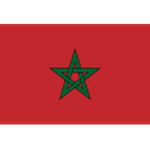
Netherlands’ Orange Surge Meets Morocco’s New-Generation Belief in Monterrey
Introduction
The Netherlands have reached the FIFA World Cup 2026 Round of 32 with the kind of attacking numbers that demand attention, but Ronald Koeman knows better than to mistake goals for control. His side topped Group F with seven points, scoring 10 times across three matches, yet the Dutch also conceded in every game. That contradiction now follows them to Estadio Monterrey, where Morocco wait with their own blend of ambition, resilience and unfinished business.
Morocco’s route into the knockout stage was nearly as impressive, even if it ended with a small sting. Mohamed Ouahbi’s side finished level on seven points with Brazil in Group C but had to settle for second place on goal difference. A 1-1 draw with Brazil, a 1-0 win over Scotland and a 4-2 victory over Haiti made this a strong group campaign by any reasonable measure. Still, Morocco did not come to this World Cup to admire respectable progress.
This is a Round of 32 match with layers. The Netherlands are trying to turn their attacking rhythm into a serious title challenge. Morocco, semi-finalists four years ago, are trying to prove that Qatar 2022 was not a peak but a beginning. It is also a meeting between two football cultures linked by players, clubs and migration stories, with Koeman himself noting how familiar the Dutch are with a Moroccan squad full of players shaped by European football.
Road to the Knockout Stage
The Netherlands began their World Cup with a warning rather than a statement. Their 2-2 draw with Japan in Dallas was exciting, but it also exposed the gaps that still exist in Koeman’s structure. Virgil van Dijk and Crysencio Summerville scored, but Japan struck through Keito Nakamura and Daichi Kamada, the latter arriving late enough to deny the Dutch a winning start. It was a match that showed the Netherlands could create chances quickly, but also that they could lose defensive spacing when opponents moved the ball cleanly through midfield.
That frustration shaped the response against Sweden. Koeman turned to Brian Brobbey as a more direct centre-forward, and the decision changed the feel of the Dutch attack. Brobbey scored twice inside the opening stages, Cody Gakpo added two of his own, and Summerville finished the 5-1 victory late on. The scoreline was emphatic, but the deeper message was tactical: the Netherlands suddenly had a forward who could pin centre-backs, attack crosses and give Gakpo and Donyell Malen cleaner spaces around him.
The final group match against Tunisia brought confirmation. The Dutch won 3-1 in rainy Kansas City, helped by an early own goal before Brobbey scored his third goal of the tournament and Jan Paul van Hecke restored the two-goal cushion after Tunisia briefly threatened. Koeman’s side did enough to top the group ahead of Japan and avoid Brazil in the first knockout round. Yet even after qualification, the manager was careful. He spoke about Morocco as a serious test and pointed to compactness, defensive positions and transition speed as areas still needing work.
Morocco’s campaign had a different rhythm. They opened against Brazil and took the lead through Ismael Saibari before Vinícius Júnior equalised. That 1-1 draw mattered because it confirmed Morocco could still live with elite opposition after the emotional high of their 2022 run. They were not simply sitting deep and surviving. They pressed, carried threat and showed that the team under Ouahbi is comfortable playing with more possession and more responsibility.
The second match against Scotland was decided almost before it had settled. Saibari scored after 71 seconds, the fastest goal of this World Cup so far, and Morocco protected the 1-0 lead with a performance built on pressure, physicality and control. They completed 601 passes, a record figure for an African team in a World Cup match since 1966, but the narrow scoreline also told a familiar story: Morocco were dominant, but not always ruthless.
That same pattern reappeared in the 4-2 win over Haiti, only in a wilder form. Morocco twice had to come from behind after Haiti scored through a deflected opener and a Wilson Isidor strike. Achraf Hakimi equalised once, Saibari scored again before half-time, and late goals from Soufiane Rahimi and Gessime Yassine finally settled the match. Morocco reached seven points, but Brazil’s 3-0 win over Scotland meant the Atlas Lions finished second on goal difference. Qualification was secured. First place slipped away.
Team News
The Netherlands have no newly confirmed suspension problem entering this match, but Koeman’s selection still carries decisions. Nathan Aké replaced Micky van de Ven against Tunisia, while Crysencio Summerville did not start after his influential performance against Sweden. That final group lineup looked close to full strength: Bart Verbruggen in goal, Denzel Dumfries and Aké as full-backs, Jan Paul van Hecke alongside Van Dijk, and a midfield of Ryan Gravenberch, Frenkie de Jong and Tijjani Reijnders.
Brobbey’s form has probably settled the central-forward debate, at least for now. Memphis Depay and Wout Weghorst remain options, but Brobbey’s impact against Sweden and Tunisia has given the Netherlands a more balanced attacking structure. The bigger question is whether Koeman keeps Malen on the right or brings Summerville back in from the start to add more one-v-one speed against Morocco’s left side.
Morocco also have no fresh confirmed suspension that should reshape the XI. Their major selection question is attacking balance. Ayoub El Kaabi started against Haiti as Morocco pushed for goals, but Rahimi and Yassine both scored from the bench. Ouahbi must decide whether to keep a more direct No. 9 from the beginning or use Rahimi’s movement later against tired legs.
Achraf Hakimi is central to Morocco’s plan and should continue at right-back. His goal and influence against Haiti underlined his importance not only as a defender but as a second playmaker from wide areas. Ismael Saibari’s place is also secure after scoring in all three group games. Around them, the choices between Bilal El Khannouss, Azzedine Ounahi, Sofyan Amrabat and Neil El Aynaoui will determine whether Morocco try to control the midfield or make the match more vertical.
Single yellow cards from the group stage are wiped before the Round of 32 under the tournament’s disciplinary approach, so caution management is less restrictive than it was during the final group games. Any suspension already triggered would still apply, but neither side has a widely reported fresh ban heading into this fixture.
Players to Watch
Brian Brobbey has become one of the most important Dutch stories of the tournament. Before the Sweden match, the Netherlands were still searching for the right reference point in attack. Since then, Brobbey has looked like the forward who makes the rest of the system make sense. His strength forces centre-backs to engage, his box movement gives Dumfries and Gakpo a target, and his finishing has been sharp enough to change Koeman’s hierarchy up front.
Cody Gakpo is the Netherlands’ most natural match-winner from wide areas. His double against Sweden showed the value of his timing at the back post and his ability to finish when attacks are built from the opposite flank. Against Morocco, he may find himself opposed by Hakimi in one direction and needing to track him in the other. That two-way duel could define the Dutch left side.
Frenkie de Jong is the player who can calm or quicken the Netherlands. When he receives cleanly from the centre-backs, the Dutch look like a side capable of controlling tempo. When he is crowded, their buildup becomes more direct and less secure. Morocco will know that pressing De Jong without leaving Reijnders free between the lines is a difficult but necessary balance.
Ismael Saibari has been Morocco’s breakout figure. He scored against Brazil, struck after 71 seconds against Scotland, and found the net again in the Haiti match. That is not just a scoring run; it is a sign of a player who understands when to arrive in the box, when to press and when to exploit the space created by Brahim Díaz or Hakimi. The Netherlands cannot treat him as a hot streak. At this World Cup, he has been Morocco’s attacking pulse.
Achraf Hakimi remains Morocco’s most influential two-way player. His equaliser against Haiti was an example of his ability to appear in decisive attacking zones, but his defensive assignment may be even more demanding here. If Gakpo starts from the Dutch left and Dumfries attacks from the right, Hakimi’s choices will matter constantly: step out, hold the line, overlap, invert, or stay deeper to protect the transition.
Yassine Bounou may not have had a perfect group stage, especially given the chaotic Haiti match, but his knockout pedigree still matters. Morocco’s best version often includes long spells without panic because they trust the goalkeeper behind the defensive line. Against a Dutch side that have scored 10 in three games, Bounou may need one of those nights where his calm spreads through the back four.
Tactical Analysis
The Netherlands are expected to stay with a 4-3-3 that can stretch into something close to a 3-2-5 in possession. Dumfries gives them height and force on the right, Aké or Van de Ven provides a more conservative balance on the left, and Van Dijk remains the organiser behind Van Hecke. In midfield, Gravenberch offers athletic security, De Jong controls the first progression and Reijnders looks to connect with the front line between the lines.
The Dutch attacking pattern has become clearer over the group stage. They want early width, repeated crossing positions and a central forward who can attack the six-yard box. Against Sweden, that formula overwhelmed a talented but loose defensive structure. Against Tunisia, it produced another quick advantage. Morocco will not be as easy to pull apart. Ouahbi’s side defend with better distances, and their midfielders are more comfortable pressing forward than simply retreating toward their own penalty area.
Morocco are likely to begin in a 4-2-3-1 or 4-3-3 depending on the midfield choice. Hakimi and Noussair Mazraoui give them technically secure full-backs, while Chadi Riad and Issa Diop offer a centre-back pairing with height and passing range. If Amrabat starts, he can anchor transitions and protect the centre. If El Khannouss or Ounahi is used higher, Morocco gain more craft but may give the Dutch more room to attack second balls.
The central tactical battle is about rest defence. The Netherlands will push numbers forward, especially through Dumfries and Gakpo’s side. Morocco will try to tempt those runs and then break into the spaces behind them. Saibari’s timing, Brahim Díaz’s ball-carrying and Hakimi’s surges from deep make Morocco dangerous when the first pass after a regain is clean. Koeman has already spoken about needing faster collective transitions. This is the match where that issue becomes more than a coaching note.
Morocco’s pressing will not be constant, but it could be targeted. De Jong is too good to be chased blindly; he wants opponents to jump so he can slip away from them. Instead, Morocco may press on triggers: a slow square pass from Van Hecke to Van Dijk, a heavy touch from a full-back, or a backward pass to Verbruggen. If they can force the Netherlands into hurried clearances, Brobbey’s hold-up ability becomes important, but Morocco’s centre-backs will still prefer aerial duels to being dragged into wide recovery runs.
The wide zones are equally fascinating. Dumfries is one of the Netherlands’ best attacking weapons because he turns routine possession into penalty-area pressure. But his advanced positioning can leave space behind him, and Morocco have the runners to attack that lane. On the other side, Gakpo against Hakimi is not just winger against full-back. It is a contest between two players who want to attack the same corridor at different moments.
Set pieces offer both teams a serious route to goal. The Netherlands have Van Dijk, Van Hecke, Brobbey and Dumfries as aerial targets. Morocco have Hakimi’s delivery, Diop’s height, Riad’s presence and enough second-ball quality to keep attacks alive after an initial clearance. In a knockout match where open-play control may swing back and forth, corners and free-kicks could become the moments that break the emotional rhythm.
If the match remains level late, the benches could pull it in different directions. The Netherlands can add Weghorst for a more direct aerial finish, Memphis for invention, or Summerville for pace against tired full-backs. Morocco can turn to Rahimi’s penalty-box movement, Yassine’s freshness or a more defensive midfield body if they need to survive a Dutch push. Extra time would probably favour the side that manages energy better in the wide areas, because both teams ask a lot from their full-backs.
Knockout Stakes
The Round of 32 removes the protective cushion that shaped parts of the group stage. The Netherlands could survive a draw with Japan because there were two matches left to repair the table. Morocco could live with finishing behind Brazil because seven points still carried them into the knockout stage. Now the calculation is brutally simple: win and stay, lose and leave.
That pressure may influence the Netherlands more than Morocco. Koeman’s team have scored freely, but the defensive record is untidy. They have conceded in seven straight matches, according to the manager’s own concern after the Tunisia game, and Morocco are exactly the kind of opponent who can punish loose spacing. The Dutch may still dominate territory, but they cannot afford to attack as if the transition does not exist.
Morocco may prefer a more controlled match than their 4-2 win over Haiti. That game was thrilling, but it also exposed them to counters and forced them to chase twice. Against the Netherlands, they will likely want a tighter tempo, especially early. If they can reach the second half level, the pressure may begin to move toward the Dutch, whose attacking numbers have raised expectations.
The winner will move into the Round of 16 against the winner of the match between the Group E runner-up and the Group I runner-up. Côte d’Ivoire are already positioned as Group E runners-up, while the final identity of the Group I runner-up depends on the completion of that group’s last round. For now, the route is clear enough to tempt imagination but not clear enough to distract either camp.
Predicted Starting XIs
Netherlands, 4-3-3: Bart Verbruggen; Denzel Dumfries, Jan Paul van Hecke, Virgil van Dijk, Nathan Aké; Ryan Gravenberch, Frenkie de Jong, Tijjani Reijnders; Donyell Malen, Brian Brobbey, Cody Gakpo.
The main Dutch selection doubts are at left-back and right wing. Micky van de Ven could return if Koeman wants more recovery pace against Morocco’s transitions, while Crysencio Summerville is a strong candidate to start if the manager wants sharper one-v-one threat from the opening whistle. Brobbey’s current form makes him the likely centre-forward.
Morocco, 4-2-3-1: Yassine Bounou; Achraf Hakimi, Issa Diop, Chadi Riad, Noussair Mazraoui; Sofyan Amrabat, Azzedine Ounahi; Brahim Díaz, Bilal El Khannouss, Ismael Saibari; Ayoub El Kaabi.
Morocco’s attacking selection is less settled. Soufiane Rahimi and Gessime Yassine strengthened their cases with goals from the bench against Haiti, while Neil El Aynaoui and Ayyoub Bouaddi are midfield options if Ouahbi wants more legs and structure. Saibari, Hakimi, Bounou and Brahim appear central to the plan.
Match Prediction
The Netherlands look slightly stronger on attacking form. Ten goals in three matches is not an accident, and Brobbey’s emergence has solved a problem that had been hanging over Koeman’s team. Gakpo is dangerous from the left, Dumfries keeps arriving in the box, and De Jong gives the team a level of midfield control that few sides can match when he has passing angles around him.
Morocco, though, are built to make this uncomfortable. They have already drawn with Brazil, they have a scorer in Saibari who is playing with rare confidence, and their full-backs give them a way to compete for territory rather than simply defend deep. Their weakness is that they can leave matches open when they chase momentum. Haiti exposed that. The Netherlands have more quality than Haiti to punish those moments.
The likely rhythm is Dutch possession, Moroccan counter-pressure and a match that turns repeatedly around the first pass after turnovers. If the Netherlands score early, Morocco will have to open up and the game may become stretched. If Morocco keep it level into the final half-hour, the Dutch defensive anxiety could become a real factor.
Extra time is realistic, especially because Morocco have shown enough control and resilience to drag elite opponents into difficult territory. But the Netherlands’ attacking variety and Brobbey’s form give them a narrow edge.
Prediction: Netherlands 2-1 Morocco
Final Verdict
Netherlands vs Morocco feels like one of the first proper stress tests of the FIFA World Cup 2026 knockout stage. The Dutch have the goals, the structure and the heavyweight names, but they are still trying to close the gap between attacking confidence and defensive security. Morocco have the belief of a team that no longer sees deep World Cup runs as fantasy. They have lived that story once and are trying to write the next version with a new manager and a new attacking hero.
The tactical story will revolve around space: the space behind Dumfries, the space around De Jong, the space Hakimi leaves and attacks, and the space Saibari keeps finding at exactly the right moment. The emotional story is just as strong. The Netherlands are chasing validation after years of almost-but-not-quite tournaments. Morocco are chasing permanence among the world’s elite.
Monterrey may not decide who wins the World Cup, but it should reveal something important about both teams. If the Netherlands manage the transitions and feed their front line early, they will look like a side moving with real momentum. If Morocco turn Dutch ambition into vulnerability, another knockout night could begin to bend toward the Atlas Lions. That is why this fixture carries more weight than a place in the next round. It is a test of whether attacking form or tournament nerve travels better when the group stage is gone.
| Home | Draw | Away | |
|---|---|---|---|

|
2.10 | 3.20 | 3.50 |

|
2.10 | 3.30 | 3.60 |

|
2.15 | 3.30 | 3.50 |

|
2.10 | 3.10 | 3.60 |

|
2.18 | 3.41 | 3.78 |

|
2.14 | 3.35 | 3.65 |
