Each World Cup starts with one moment – not a final or a major clash determining the champion, but a first match that subtly establishes the pace of the whole event. It hardly ever singles out a winner on its own; however, it quite often determines the atmosphere of the very first days of the tournament.
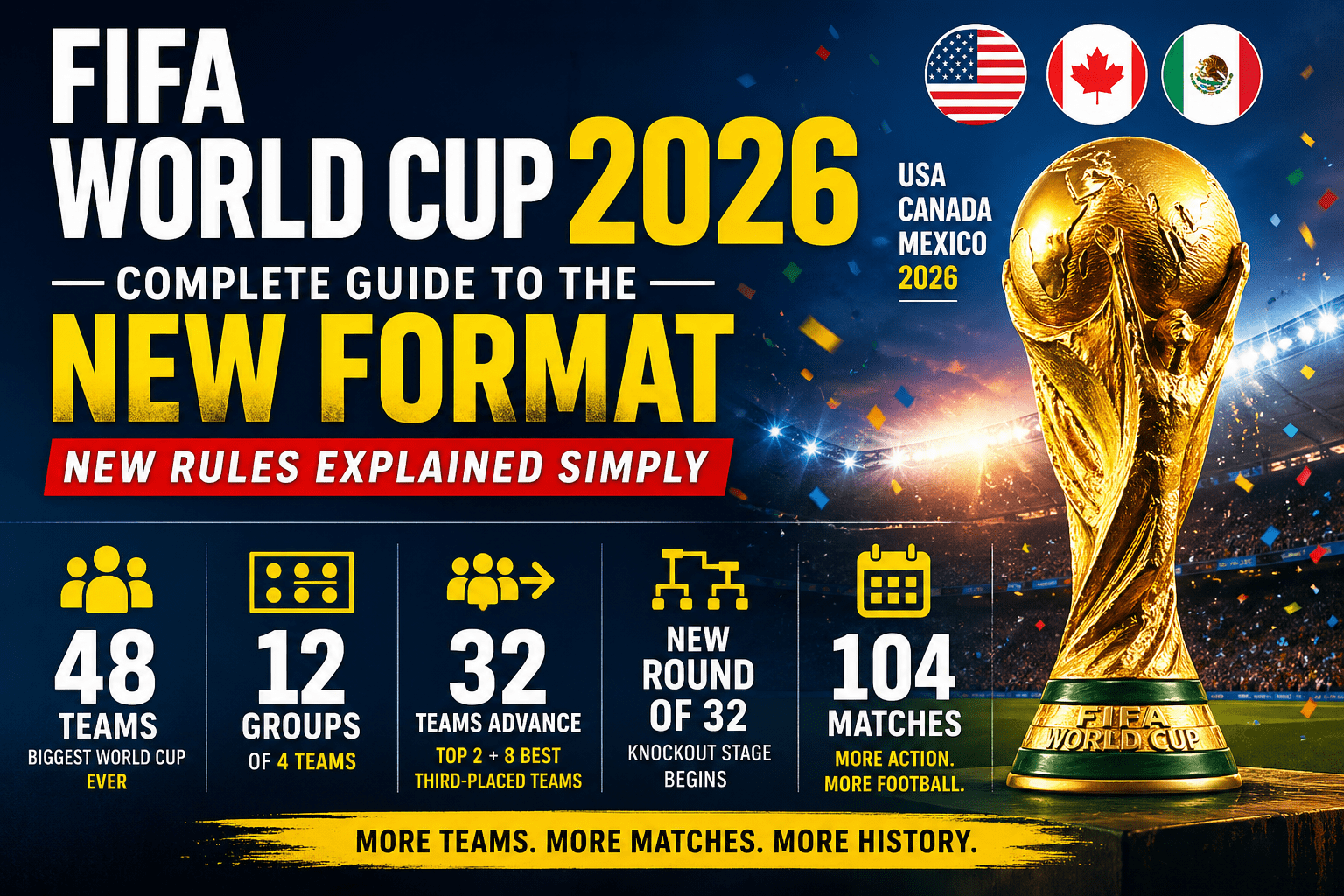
Come 2026, that single moment will be even more important. The number of teams is increased to 48, and the matches will be held in three countries – the USA, Canada, and Mexico, so the size of the competition changes. The first match will be less focused on the ceremonial act and more on setting the mood for a World Cup like no other.
Here is the detailed outline of the FIFA World Cup 2026 opening match – from the date and place to the participating teams and what the game could show.
📅 Opening Match Date
The tournament officially kicks off on June 11, 2026, in the host country. However, depending on your location, the opening match may fall on June 12 as per your local time zone.
With matches played across multiple regions, kickoff dates and times will vary globally — but the tournament’s journey begins with this opening fixture.
🏟️ Venue & Host City
The opening match will be played at Estadio Azteca in Mexico City, one of the most iconic venues in World Cup history. It will become the first stadium to feature in matches across three different World Cup editions, adding another layer to its legacy.
With a capacity of around 83,000, the stadium is expected to be full, with strong support for Mexico creating a charged atmosphere.
Few venues carry this kind of history. It has hosted some of the tournament’s most memorable moments, and in 2026, it is set to once again mark the beginning of a new World Cup story.
⚽ Teams Playing the Opening Match
The 2026 edition, being hosted by three nations, will feature one of the hosts, Mexico, taking on South Africa in the opening encounter. In this Group A encounter, Mexico are stronger and more experienced and is likely to excel in the opening match; however, the home advantage can quickly turn into added pressure if they concede early goals.
⏰ Kickoff Time (Your Local Time)
The match will kick off at 1:00 p.m. as per local time in Mexico; however, for your convenience, the kickoff time below is automatically adjusted based on your current location, so you don’t need to calculate time differences manually.
Whether you’re watching from Asia, Europe, or the Americas, the time shown reflects your local schedule. If you want to see the full schedule in your local time, check the 2026 FIFA World Cup Schedule by time zone.


🔥 Why the Opening Match Matters
Opening matches carry a different kind of pressure. The host nation steps onto the pitch with expectation, but also with the weight of starting the tournament on the right note.
These games are often cautious. Teams are aware that a poor result can immediately complicate their path, especially in a format where consistency matters over multiple matches.
At the same time, the atmosphere can lift performances, creating moments that feel bigger than the match itself.
📊 How the Game Might Be Played
Opening fixtures rarely turn into open, high-scoring contests. Teams are still adjusting — to the tournament, the conditions, and the pressure that comes with it.
Expect a measured approach. Defensive structure usually comes first, with teams looking to control the game rather than chase it.
But as with any World Cup match, a single goal can shift everything, forcing a more open and unpredictable contest.
🌎 More Than Just a Match
The opening fixture is also a global event. It’s not just about the teams on the pitch, but the moment itself — the ceremony, the atmosphere, and the sense that something bigger has begun.
For players, it’s the point where preparation ends. For fans, it’s where anticipation turns into reality.
From this match onward, the tournament takes on its own momentum.
🏁 What Follows
After the opening game, the schedule accelerates quickly. Matches will be played across different cities, climates, and time zones, creating a rhythm that defines the group stage.
With the expanded format, early results carry more nuance. Teams don’t just play to win — they play to stay in contention.
The opening match may not decide the tournament, but it offers the first real indication of how it might unfold.